Read the latest blog in our Day Two Series: The Demo Was The Easy PartDay Two Series: The Demo Was The Easy Part Learn more
Nina Stoupnitzky - Business Development Strategist at Thread AI
August 31, 2026
In August, Christopher Cox wrote an astounding New York Times Magazine piece about how a national blackout could actually happen. I kept coming back to this one line from Mark Lauby, NERC’s chief engineer, that the former Secretary Jennifer Granholm also quoted in a LinkedIn post: energy represents only 7% of the U.S. economy, but “it’s the first 7%, because nothing else works after.”
The article is mostly about physical fragility, and the physical case is grim. Granholm’s conclusion is that we need to build at a speed and scale the U.S. hasn’t seen in generations. And she’s right. But we also need to deploy technology at this same speed and scale to bring our hardware up to the 21st century.
Energy needs increased. NERC’s 2025 Long-Term Reliability Assessment, released in January, projects summer peak demand growing 224 GW over ten years. That number was 132 GW in the prior year’s assessment, jumping 69% in just 12 months.
Meanwhile the grid became bidirectional in a way it was never designed to be. In June, SEIA reported 6 million solar installations in the U.S., 97% of them residential rooftops, and 45% of those came with a battery. Those are millions of small generators sitting on distribution circuits engineered for one-way flow.
Then there’s the threat of bad actors. Federal investigators have found state-sponsored intruders sitting inside a U.S. utility’s network, quietly copying grid operating procedures and network layouts rather than breaking anything. The grid is growing more susceptible and while no cyberattack has caused a customer outage on the U.S. electric grid yet (thankfully!), we need to actively protect ourselves with modern cybersecurity controls and coordination.
The other significant change is intermittency, requiring somebody to manage intermittent and often distributed energy resources every hour of every day. Wind and solar supplied 17% of U.S. electricity in 2025, a record, with utility-scale solar generation up 34% in a single year. That output does not arrive when you want it or even when you predict it. CAISO curtailed 5,260 GWh of renewable generation in 2025, up 22% year over year. In April 2026 alone, it curtailed 18% of the energy its grid-scale wind and solar fleet could have produced. The evening transition is the harder problem: CAISO must replace roughly 13,000 MW inside about three hours as solar rolls off. As load and intermittent resources grow, so does the risk of an evening emergency because that is when solar drops off and demand is still high. In January 2025, MISO watched wind fall at 1,600 MW per hour while solar was ramping down and evening load was climbing, all at the same time. Batteries are absorbing a real share of this, but a battery only helps if something decides when to charge it.
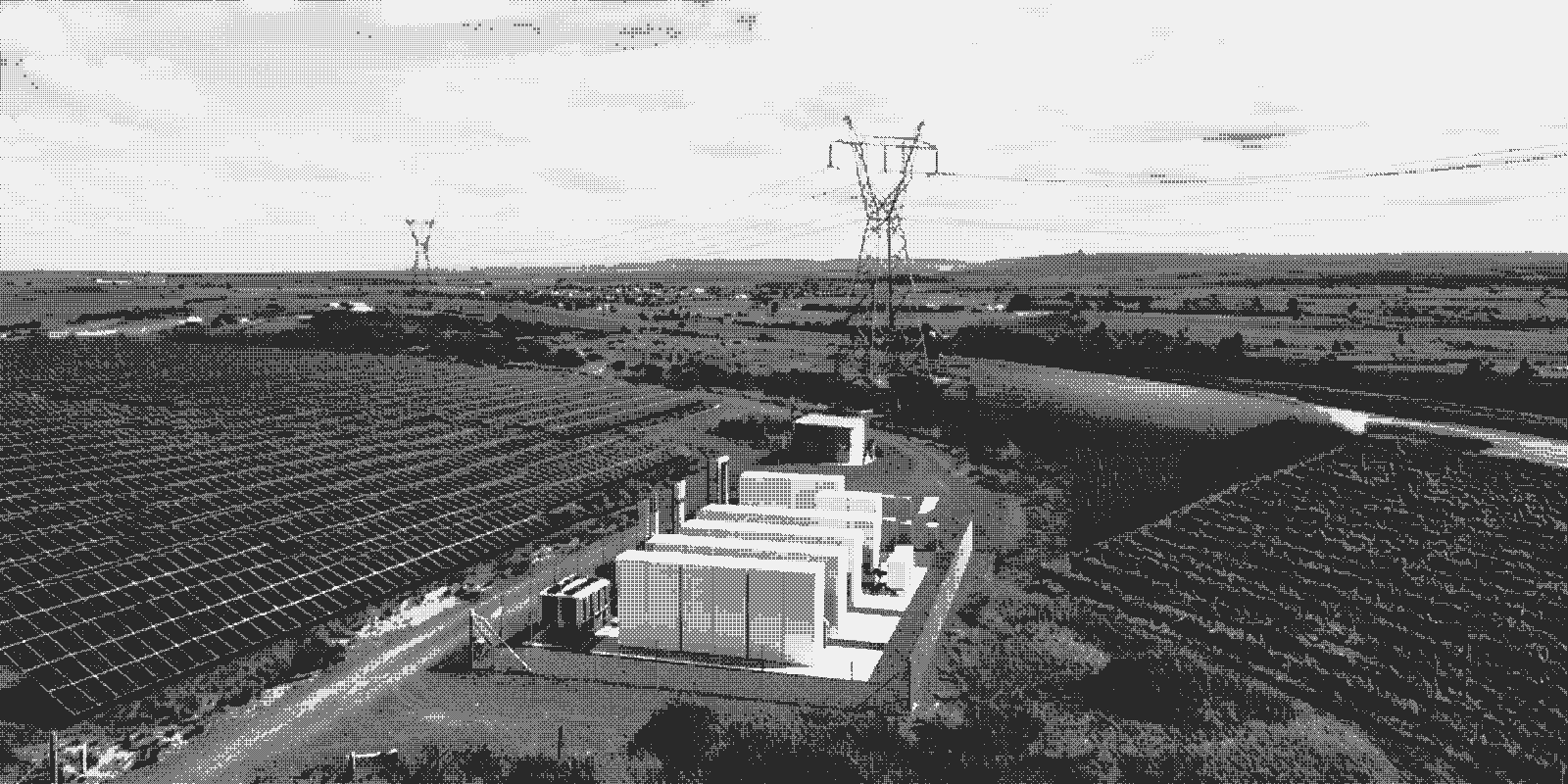
Faced with that much complexity, the instinct is to consolidate: one vendor, one platform. It sounds like a simplification. It usually isn’t. A Distributed Energy Resource Management System (DERMS) is good at forecasting and dispatching all those rooftop panels and batteries because a team spent a decade on DER forecasting and dispatch. An AMI head-end and its meter data management system are also unique - they pull in and clean smart meter readings, validating them and then storing billions of them. SCADA, the supervisory control system operators use to watch and switch substation equipment in real time, does it against latency budgets measured in milliseconds. Your GIS holds the map of what is connected to what, and your outage management system works out where a fault is and runs the restoration. Collapse those into one suite and you lose the specialty that made each worth buying. Connect them through an orchestration layer, and you can start doing things none of them can do alone.
SYSTEMS OF RECORD
Keep the specialists. Add a conductor.
DERMS
AMI
SCADA
GIS
OMS
LEMMA · ORCHESTRATION LAYER
owns no data · replaces nothing · vendor-agnostic
Vegetation & asset inspection
Outage detect, dispatch, notify
DER dispatch & flexibility
Two examples:
1
Ingest drone imagery and send recommendations to your team with reasoning attached and a human-in-the-loop action to proactively remove a fire hazard, like a tree limb, or send a crew to fix it when it aligns with their next preventative maintenance round.
At Thread AI, we have already built this shape of workflow. Lemma ingests the live video stream and the aircraft telemetry in parallel, runs computer-vision object detection on the feed to find hazards, and has an LLM interpret the scene. Every detection carries a confidence score from the vision model, and severity is assigned from what was found and where it was found: proximity to energized equipment, size, position relative to critical assets. Because this runs on the live feed, the hazard surfaces during the flight instead of in a post-processing queue three days later. The confidence thresholds, recommendation options and severity rules are the part you tune to a specific utility’s hazards during discovery. This not only saves time and money, but it also promotes safety and contributes to disaster prevention.
2
Tie a customer’s phone call to physical reality before a human touches it.
Lemma pulls interactions from every channel through its API, the contact center, the IVR, the mobile app, the web portal, and normalizes them into one interaction record no matter where they came from. An LLM classifier reads each one as it arrives. Then, instead of blindly following a customer’s words, it checks them: the customer’s premise resolves to a device and a feeder across the connectivity model, and that gets matched against OMS and ADMS outage records and AMI 2.0 meter status. From there, the workflow isolates the device, dispatches the nearest crew carrying the right skillset and the right material, and starts hourly updates to everyone on the affected feeder. At scale, this results in servicing utilities’ millions of customers, reducing resolution time and minimizing extended outages.
WORKFLOW
One outage call, four stages, seven systems
What the coordination layer does between the phone ringing and the crew arriving
01
Capture
Normalized into one interaction record, whatever the channel.
02
Classify
Reads each interaction as it arrives, in real time.
03
Verify
Premise resolves to a device and feeder, then checks live system state.
04
Act
Isolate, dispatch the nearest qualified crew, start hourly updates.
WHAT VERIFICATION BUYS YOU
“My power is out” downstream of a known outage is a crew dispatch. The same words off a meter still showing voltage is not.
These workflows touch OMS, AMI, SCADA, GIS, the mobile workforce system, materials inventory, the customer platform, and more! That’s six or seven vendors. This is why Thread AI built Lemma the way it did. It sits above those systems as a vendor-agnostic control plane: each process is a Worker made of States, context carries through the whole run, and human-in-the-loop checkpoints sit wherever a decision needs an operator’s signature. Every decision an agent makes is inspectable afterward, which matters more here than in almost any other industry. Nobody should deploy an opaque agent with authority over a breaker.
AI is being aimed at nearly everything right now, much of it low stakes. The grid has the strongest claim on it. Not because generative models will design substations, but because the unglamorous work of getting information from one system to the right person in time is exactly what this technology is good at, and exactly what a grid running this close to its limits requires.
Inquire here if you are working out how your independent systems should coordinate with one another. We welcome the opportunity to discuss how Lemma sits above them as a vendor-agnostic control plane.